
Searching York County Criminal Dockets
Nebraska runs one statewide system for this. The official JUSTICE one-time search covers York County Court and District Court cases alike. Type the party's name the way the court spells it. Pick York County, then choose the court and the criminal case type. Know the fees first: the live service charges $17 per search, even when nothing comes back. Results cap at 30 cases. They stay viewable for a 30-day window under the service's stated terms. The service carries a 24-hour lag warning, and results expire after three days. What you get is a court-case lookup, not a full law-enforcement history.
Match the court named on any notice you have. Misdemeanors, traffic prosecutions, and early felony steps usually sit in York County Court. Felonies move to York District Court after bindover. A common surname gets much easier to narrow. Add a case year, a judge, an attorney, or the right court type.
- Open the official JUSTICE service and select an individual or entity party type.
- Enter the party in the court-record format, beginning with last name, and select York County.
- Choose County Court or District Court, then select criminal and a subtype when that information is known.
- Verify the caption, case number, judge, attorney, and filing date before opening the case details.
- Read the latest register entry, setting, and formal disposition together; request a clerk copy when the underlying document matters.
York Criminal Docket Search Filters
Before paying, try the official JUSTICE search demonstration. It walks through every filter that matters. The filters cover county, court type, case year, case type and subtype, judge, and attorney. Criminal matters in the system material carry the broad CR case code. Case numbers follow a pattern: court type, a two-digit county component, case type, year, then a sequence number. Copy the number exactly as the York notice or result shows it. Guessing York's county component only invites errors.
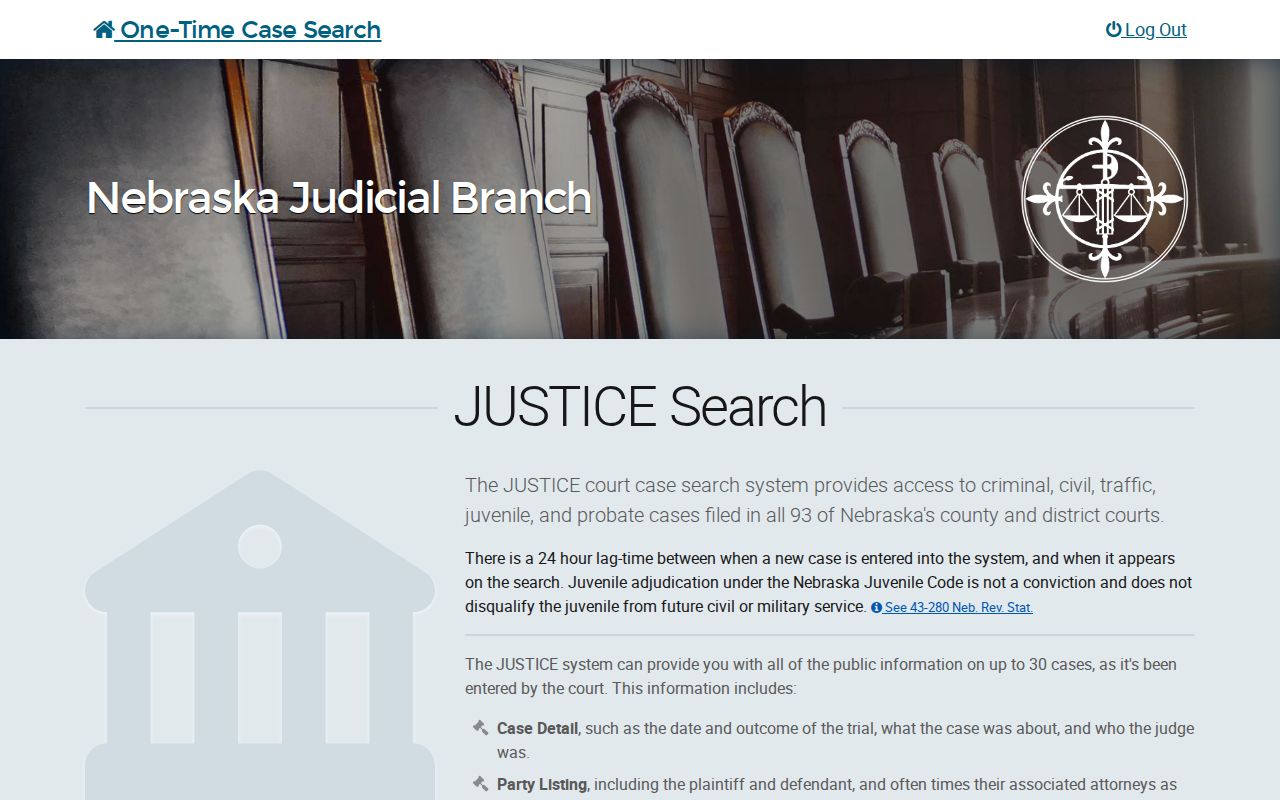
The live search screen puts the agreement step and the filters in plain view. Pick York first, then widen a surname search. Otherwise an unrelated statewide result list can bury the case you want.
The official demo fields also explain why a witness name won't work. The public search is built around parties to the case, not bystanders. A separate subscriber service offers the same statewide layer with registration and different pricing. That suits recurring research. Nebraska eFiling is different still. It serves attorneys who file and receive notices, not the public doing a free docket search.
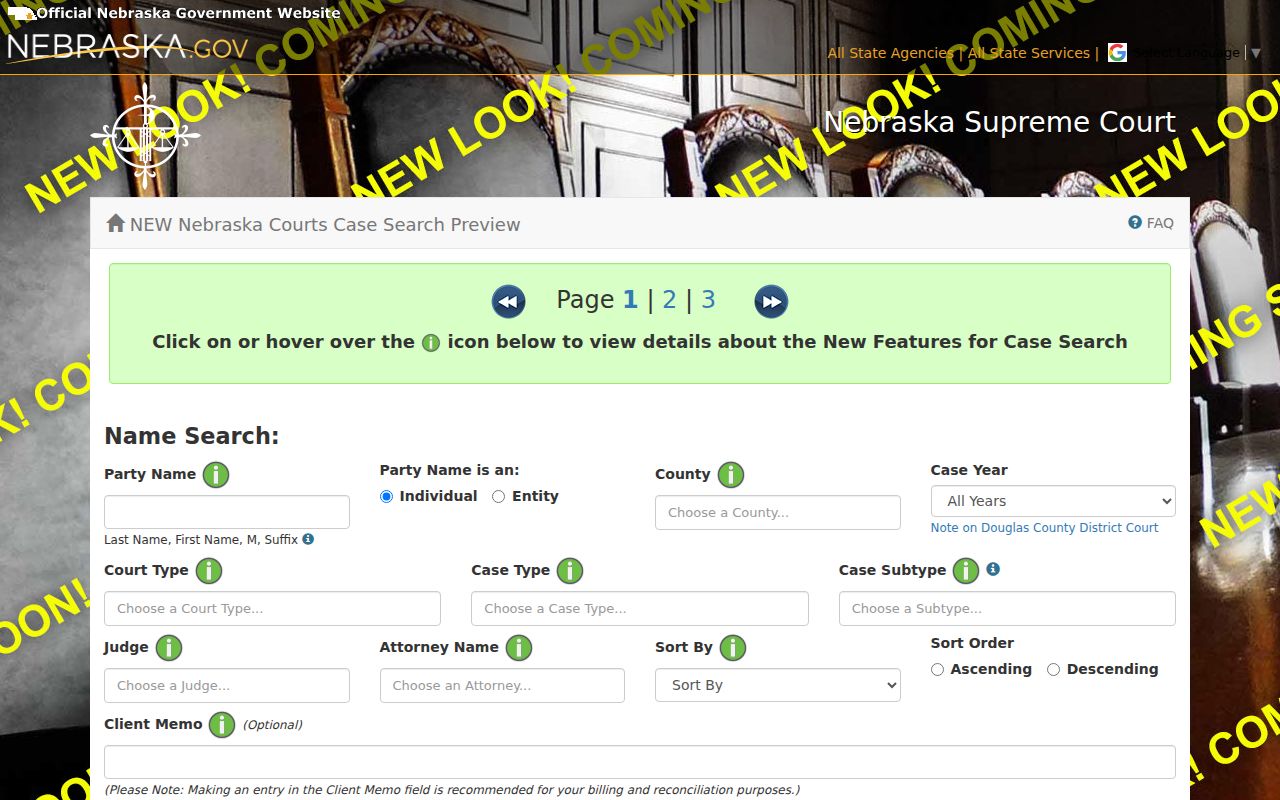
Treat a familiar year, judge, or attorney as a filter only. It does not prove the person still appears in the current case record. For that, open the case detail and read the most recent register entries.
Inside a York County Criminal Docket
A JUSTICE case detail opens with the basics. The header shows court and county, case ID, caption, classification, judge, filing date, status, and the parties and attorneys. Below that sits the Register of Actions in chronological order. The record-maintenance rule treats more than the register as part of the file. A trial docket, judge notes, financial record, and indexes all belong there. So does the case file itself. Together they form the court-maintained structure. So start at the header. Then read down through the newest accepted entry rather than trusting a single label.
| Case number | A court/county/type/year/sequence identifier, with CR used for the broad criminal type. |
|---|---|
| Parties and charge data | The caption, accused-party role, attorneys, subtype, and offense information available to public access. |
| Register of Actions | Chronological complaint, appearance, motion, order, hearing, plea, trial, and closing events. |
| Settings | The date, time, courtroom or location, judge, hearing type, and later reset or continuance entries. |
| Disposition and financials | The formal result, sentence or dismissal as recorded, plus costs, fines, payments, or restitution activity where public. |
Document images sit on a separate layer. Filings after April 16, 2008 may carry linked images, but confidentiality rules, conversion status, and lag on recent entries can leave a register line with no public image attached.
York Criminal Docket Entry Types
A charge is only a starting allegation. It is not a conviction. A hearing on the schedule is just a future setting too, until a later entry says what happened. To read a York criminal docket well, compare entries. Set the initial filing beside the later plea, verdict, judgment, dismissal, or sentencing entry. A warrant or failure-to-appear line tells you something happened, but it never gives the whole custody or enforcement story.
The official case-detail demonstration shows the register format. Dated events sit apart from the case summary and the financial blocks. Its example names and facts are not York data, yet the structure matches what you'll see on a York record.
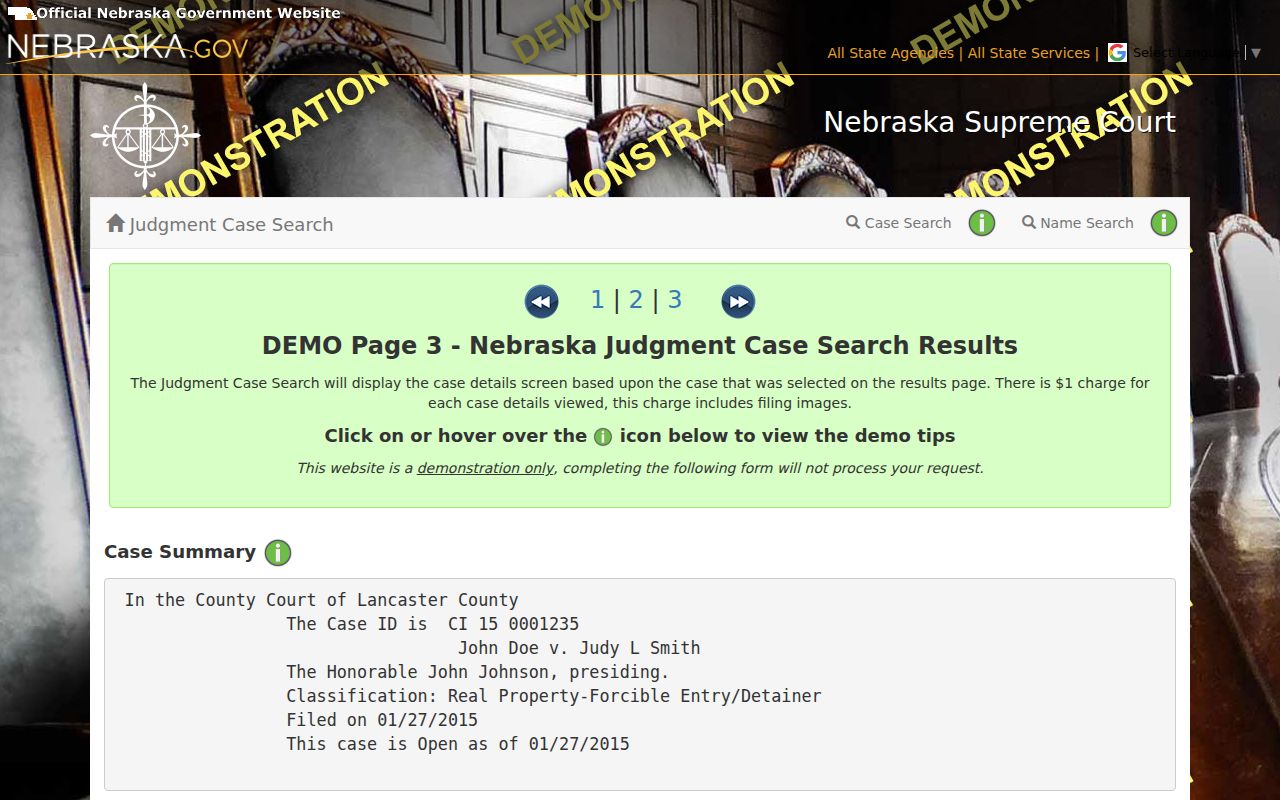
Some abbreviations carry real weight. When one controls an important decision, save the exact entry text and date, then pull the linked order or ask the right clerk. York posts no local public codebook for its shorthand.
How a Criminal Case Moves
A criminal case tends to move in stages: complaint or charge, arraignment, pretrial settings and motions, plea or trial activity, disposition, and sentencing. Each step can add more than one docket line. Settings get continued or reset all the time. That's why the latest accepted entry beats any older calendar row.
For a current hearing date, use Nebraska's separate court calendar portal. Select York and the right court. Then compare the result against the newest Register of Actions entry. A calendar check is handy. Still, when a date affects an appearance, clerk confirmation is the safer course.
Docket flow: Filing › Arraignment › Pretrial › Plea or Trial › Disposition › Sentencing
York Criminal Docket Bindovers
A single York County prosecution can carry two criminal docket numbers. County Court takes the preliminary felony stage. If the case binds over, the felony then moves to York District Court. That court is the general-jurisdiction felony court. So the same prosecution may sit on both dockets at different points. Both case numbers are worth keeping when the records show that transition.
The District Court docket is not a copy of the County Court file. Entries may cover the same charges. Yet each court keeps its own record of what happened there. For the official split of duties, see the County Court jurisdiction statute. It lays out the County Court side.
When a case shows up in both courts, search each court type separately in JUSTICE. Check the caption and filing dates against each other. After bindover, rely on the later District Court register for the felony proceedings.
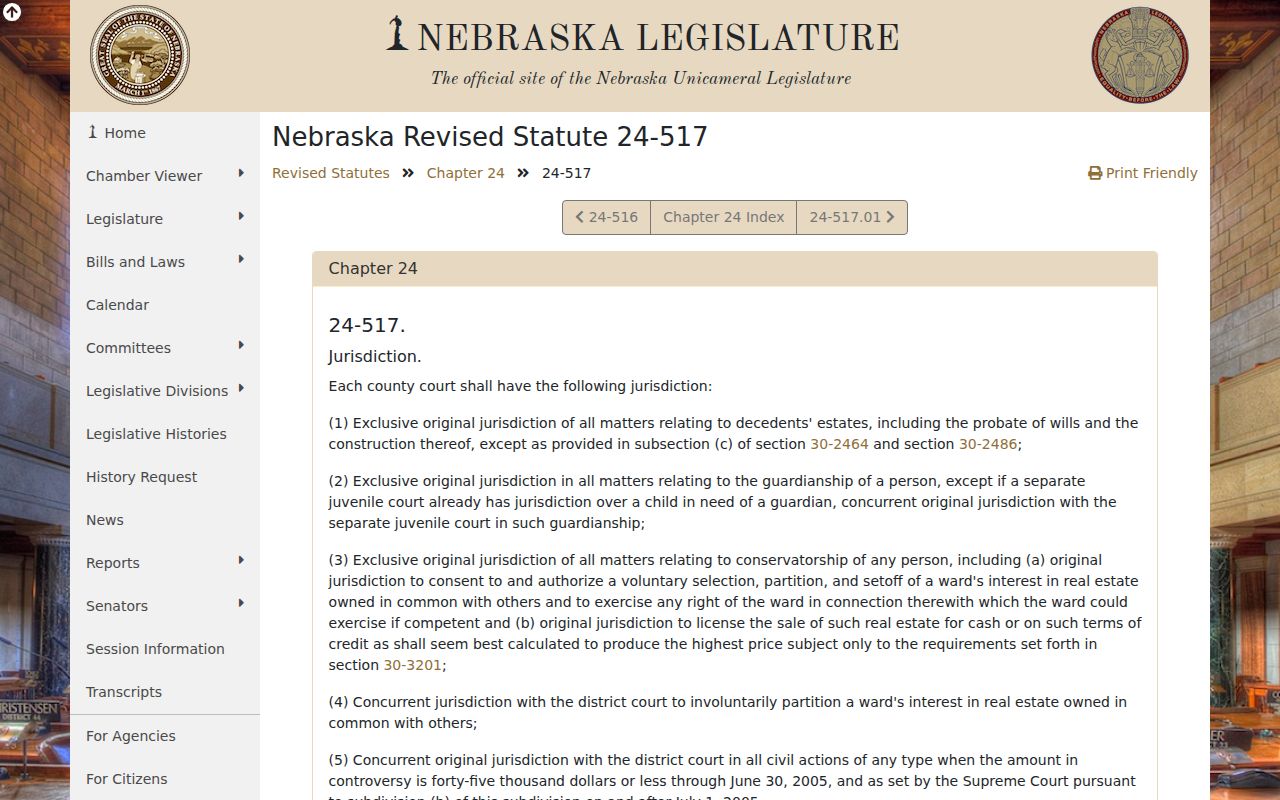
That split also explains why a one-court search can miss a stage of a York case. Still, be careful. Never merge docket entries from separate case IDs until the court record confirms they belong together.
Courts That Hold Criminal Dockets
York County Court keeps the local docket for misdemeanors, traffic matters, ordinance matters, county-court juvenile matters, and preliminary felony proceedings. York District Court takes felony cases after bindover. Both courts sit in the York County Courthouse at 510 Lincoln Avenue. The clerk routes differ, though. County Court is in Room 211 at (402) 362-4925. The District Court clerk answers at (402) 362-4038.
Start with the official York County Court page or York District Court page before a counter visit. They help with current contact details. They also work for court-specific questions. One caution: the administrative County Clerk/Register of Deeds is a separate office. It does not hold these judicial dockets.
York Criminal Docket Image Gaps
A missing image does not wipe out a Register of Actions line. It may signal a sealed or protected document. It may also be an older paper or microfilm file, a filing not yet imaged, or a temporary access snag. Before assuming the worst, recheck the party spelling, the York selection, the court type, the year, and the case subtype. The official FAQ suggests waiting up to a week for a very recent case. It also suggests retrying a reported internal-server error after 10 to 15 minutes.
Need a specific document? Use the CC-3-29 request form. List the court, county, case number, case name, and the document name or date. Copies arrive by email or mail once the required prepayment is made. The York clerk can confirm receiving and payment instructions. Note that a transcript or digital hearing audio needs its own request form. It is not the standard docket image.
Sealed Dockets and Public Access
Nebraska treats filings as public unless a rule, statute, or court order says otherwise. Access runs through several doors. JUSTICE is one. The courthouse clerk counter is another. Electronic public terminals at trial-court clerk offices or the State Library also count, as do eligible copies. Give a clerk complete party and case information. They may search a specific record for you. A broader Judicial Branch records request can be routed to the State Court Administrator under the Nebraska Public Records Act.
Not everything is open, though. Juvenile-confidential material, adoption records, protected personal identifiers, criminal-history information protected by statute, and sealed records may all be off limits. If a result or image never appears, read nothing into that absence. It is not a conclusion about the underlying event. Instead, ask the court clerk whether the barrier is access status, imaging, paper or microfilm storage, or a record not yet entered.
Key Rules:
Nebraska public-access rule, §§1-801–1-810 permits defined court-record access channels while recognizing statutory and court-ordered restrictions.
Nebraska public-viewing rule, §2-215 makes filings public unless restricted and provides for electronic terminal access and paid paper copies.
Nebraska protected-information rule, §2-210 requires protection or redaction of sensitive identifiers and supports a sealing path where appropriate.
York Criminal Docket Access Limits
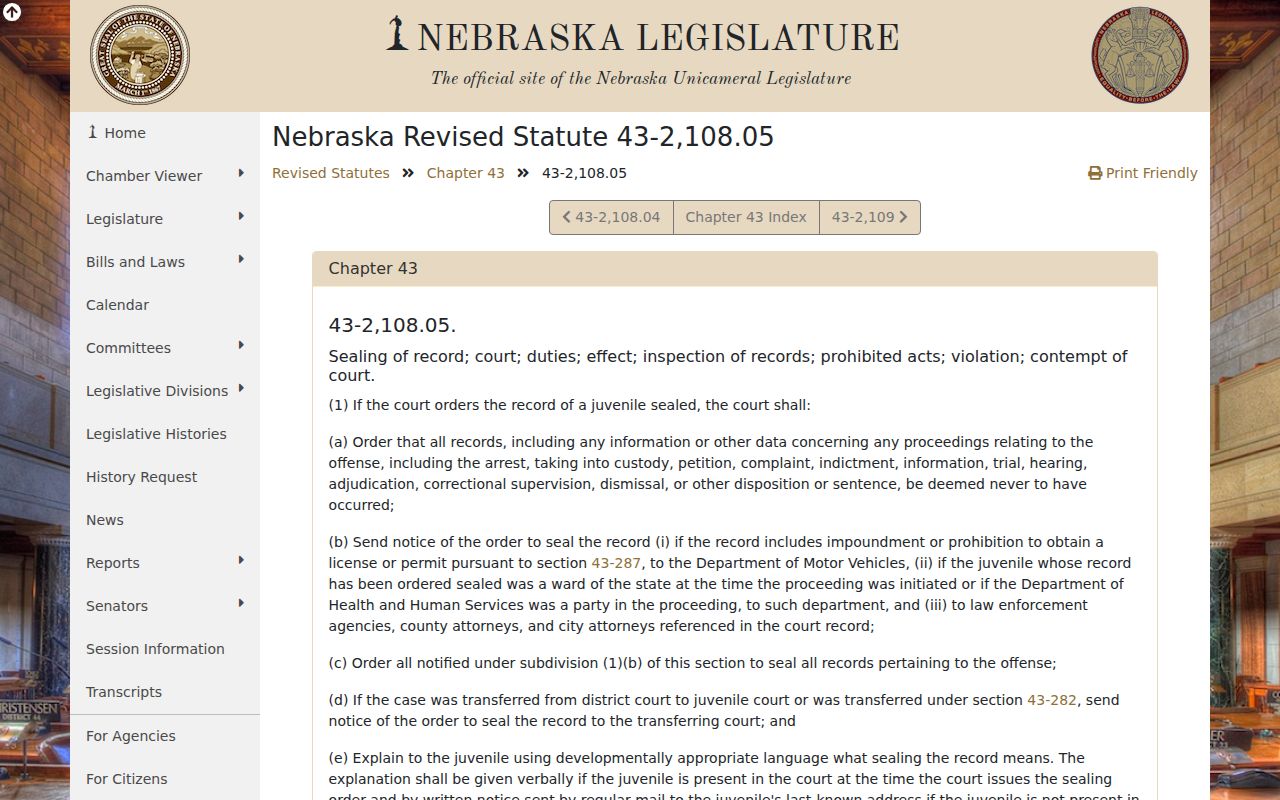
York County Court handles county-court juvenile matters, but juvenile records can be confidential or sealed under Nebraska law. The Legislature's juvenile sealing statute lays out when records may be sealed automatically or by court order. So a public case search will not answer every juvenile-record question.
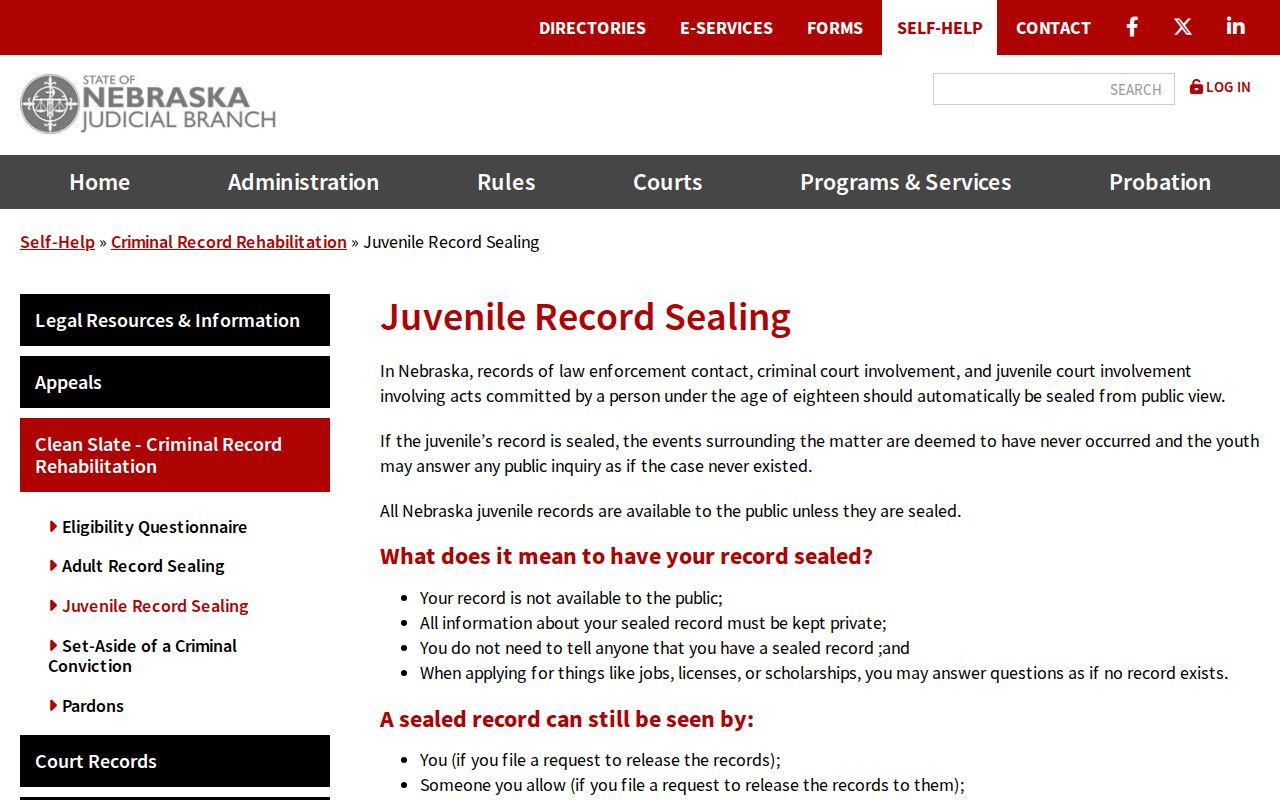
Eligible juvenile records have a formal request route, described in the Judicial Branch's juvenile sealing information. The request goes to the court where the case was filed. After sealing, access stays limited to the subject and anyone authorized by law or court order.
For a public adult criminal file, the practical fallback is the right York court clerk. A restricted juvenile file is different. Follow the statutory and court-directed process there instead of assuming the ordinary docket tools can disclose it.